In partnership with


Rural America Already Knows How Greenland Feels. We Just Don’t Get Universal Healthcare.
Recent headlines have been filled with renewed talk from the Trump administration about Greenland. Commentators point to its rare-earth minerals, its strategic location, and its importance to national security. Maps light up on cable news. Analysts talk about supply chains, China, and critical resources needed for modern technology and defense.
Greenland, we are told, matters.
If you live in rural America, that probably sounded familiar.
Because rural communities know exactly what it feels like to suddenly matter only when someone needs what is under your feet or in our case, in our mountains.
Valuable on Paper, Disposable in Practice
Greenland is a vast place with small communities, harsh weather, long distances, and a history of decisions being made far away by people who do not live with the consequences.
So is rural America.
The language used is always the same. Strategic. Necessary. Economic opportunity. National interest.
What gets left out is what daily life looks like for the people already there.
Greenland’s population is scattered across remote towns and settlements. Healthcare is hard to deliver. Staffing is difficult. When care becomes serious, patients may need to be transported hundreds or thousands of miles.
That sounds familiar to anyone in Appalachia, the Plains, the Delta, or the desert West.
But here is the difference few headlines mention.
Greenland has universal healthcare.
Distance Is Hard. Distance Plus Fear Is Worse.
Greenland’s healthcare system is not perfect. It struggles with travel delays, and the high cost of geography. But the foundation is clear. If you get sick, you will be treated. The debate is about how to deliver care, not whether you deserve it or whether the bill will ruin your family.
In rural America, distance is paired with fear.
Fear of the drive. Fear of the cost. Fear of what happens when the local hospital closes, the maternity ward disappears, or the ambulance is covering three counties.
When rural hospitals shut down, the clock starts ticking sooner. Heart attacks become deadlier. Strokes steal more time. Complicated pregnancies turn into races against miles.
Instead of fixing that, rural America keeps being volunteered for everybody else’s needs.

Join 400,000+ executives and professionals who trust The AI Report for daily, practical AI updates.
Built for business—not engineers—this newsletter delivers expert prompts, real-world use cases, and decision-ready insights.
No hype. No jargon. Just results.
Northeast Tennessee: Uranium at the Doorstep
In Northeast Tennessee, communities are fighting proposals to bring high-purity depleted uranium processing into the region.
This is not an abstract policy. These facilities would be near homes, schools, farms, and waterways.
As always, it is sold as economic development. Jobs are promised. Risks are minimized. Long-term consequences are brushed aside.
If this proposal were dropped into a wealthy suburb or major metro area, it would be dead on arrival. In rural Appalachia, it is treated as negotiable, because the assumption is that people there are desperate enough to accept anything.
Southwest Virginia: Powering Someone Else’s Future
In Southwest Virginia, another version of the same story is unfolding.
Large corporations are targeting the region for small modular nuclear reactors and natural gas power plants. Not to lower electric bills for local families. Not to stabilize rural hospitals.
These reactors and gas power plants are being discussed by politicians as power sources for massive data centers serving urban elites and global tech firms.
Our air. Our land. Our water. Our risk.
Their profit.
Residents are told this is progress. That questioning it is backward. That rural communities should be grateful for the investment.
The Rural Dumping Ground
Then there is the pattern nobody likes to say out loud.
Rural America has long been treated as the place to put what cities do not want nearby. Landfills. Waste transfer stations. Industrial byproducts. Hazardous materials. Pipelines.
If it is politically inconvenient or risky, someone eventually suggests a rural county with cheap land and limited political power.
From Appalachia to the Midwest to the West, these fights repeat themselves. Different places. Same script.
Greenland Gets Investment. Rural America Gets Excuses.
When Greenland needs infrastructure investment or help covering specialized medical care, Denmark steps in with public funding. The relationship is complicated, but the principle is simple.
Remote people are still people.
In the United States, rural communities are asked to shoulder national priorities without national support.
We are told Medicare-For-All healthcare is unrealistic. We are told hospitals must close because they are inefficient. We are told ambulance services should fundraise if they want to survive.
At the same time, rural America is expected to host uranium processing, nuclear reactors, data centers, landfills, and extraction projects in the name of national economic interests.
We are asked to take the risk without the safety net.
A Question Worth Asking
Rural America has seen this story before. Coal towns know it. Timber towns know it. Farming communities know it.
Greenland feels like a place people talk about more than they listen to.
Rural America feels exactly the same.
So when politicians point at Greenland and talk about rare-earth minerals, rural Americans should ask a simple question.
If you can plan massive strategic projects thousands of miles away, why can’t you guarantee healthcare for the people who already live here?
Greenland struggles with distance, but starts with healthcare.
Rural America struggles with distance and is told to make do.
That is not geography.
That is a choice.
Be curious, not judgmental.
Till next time, that’s the story from the ‘Back Forty’. — John W. Peace II
Magazines Interested in republishing this article? Contact the author at [email protected] for permission and details. Readers, feel free to share!

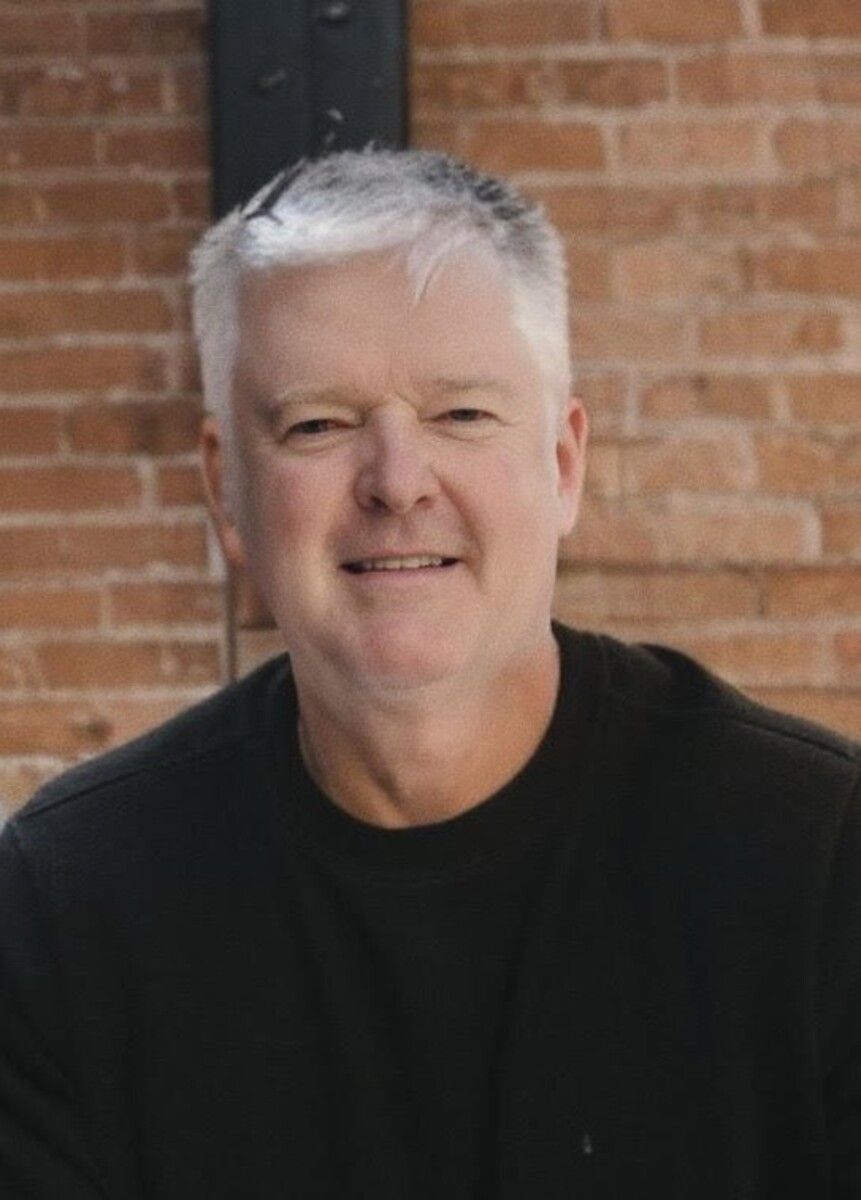
John W. Peace II is a fifth-generation farmer from Big Stone Gap, Virginia, where he grew up on his family’s dairy, Clinch Haven Farms, and still lives today. He’s a proud father to Trey and Shelby Peace, and partner in life to Cathy Swinney. A Virginia Tech graduate with graduate studies at Penn State, he served as the youngest Chair of the Wise County Board of Supervisors (2004–2008). John co-owns urTOPIX LLC (urTopixLLC.com), a Democratic campaign training firm focused on reaching rural voters that is sponsored by www.RuralAmericaRising.com PAC. He’s also a two-time Amazon bestselling author. Learn more at www.JohnWPeace.com.
Contact: https://linktr.ee/JohnWPeace
