Gerrymandering: America’s Oldest Political Hustle

Most folks in rural America never grew up hearing the word gerrymandering. Farmers, miners, factory workers, ranchers, and truck drivers may not have known the term, but they understood the feeling behind it.
Somehow the political lines always seemed to favor the people already holding power.
The word itself dates back to 1812. Massachusetts Governor Elbridge Gerry approved a state senate district twisted into such an odd shape that a newspaper said it looked like a salamander. Somebody combined Gerry and salamander together and the word gerrymander was born.
The practice quickly spread across America.
At first it was mostly partisan warfare. Federalists against Jeffersonians. Democrats against Whigs. Republicans against Democrats. Every political party accused the other of rigging maps while quietly doing the same thing once they gained power.
But after the Civil War, gerrymandering took on a darker role across the South.
Following the passage of the 13th, 14th, and 15th Amendments between 1865 and 1870, formerly enslaved Black Americans gained citizenship and voting rights during Reconstruction. For a brief period, Black lawmakers were elected across Southern states like South Carolina, Mississippi, and Louisiana.
That terrified the old political establishment.
When Reconstruction officially ended in 1877, Southern legislatures began rebuilding political control through Jim Crow laws. Poll taxes, literacy tests, white primaries, intimidation, and manipulated district maps all became tools used to dilute Black voting power.
District lines became weapons.
Communities were split apart or packed together depending on what protected the ruling political machine. Rural poor whites often got caught inside the same system. Powerful courthouse organizations and entrenched political families learned how to draw maps protecting themselves while ordinary working people had little say in the process.
Politics became less about persuasion and more about mathematics.
Then came one of the biggest turning points in American history.
In 1965, Congress passed the Voting Rights Act, signed into law by President Lyndon Johnson. The law prohibited racial discrimination in voting and required many Southern states with histories of voter suppression to obtain federal approval before changing election laws or district maps.
Washington suddenly started paying attention to how districts were drawn.
That did not stop gerrymandering. It simply changed the arguments surrounding it.
Politicians stopped openly discussing race and instead talked about population equality, communities of interest, and partisan fairness. The maps still twisted and stretched across counties and cities like crooked backroads.
The courts became heavily involved.
In 1964, the Supreme Court ruled in Reynolds v. Sims that legislative districts must contain roughly equal populations. The decision established the principle of "one person, one vote." Rural dominated legislatures across many states had long underrepresented growing urban populations.
Then came the bizarre shaped districts.
North Carolina became famous during the early 1990s for a congressional district so oddly constructed it stretched nearly 160 miles along Interstate 85 connecting Black communities. Critics said it looked more like a snake than a voting district.
In the 1993 case Shaw v. Reno, the Supreme Court ruled that race could not be the primary factor in drawing district lines.
That created a legal balancing act still argued today.
States could not dilute minority voting strength under the Voting Rights Act, but they also could not rely too heavily on race when designing districts. In much of the South, race and party affiliation overlap heavily, making the arguments even messier.
Then came another major turning point.
In 2013, the Supreme Court decision Shelby County v. Holder struck down part of the Voting Rights Act formula determining which states required federal oversight. Many Southern states no longer needed federal approval before changing election laws or redrawing maps.
Mapmakers immediately went back to work.
Texas, Alabama, Georgia, Louisiana, Tennessee, and North Carolina all became battlegrounds for redistricting lawsuits.
Today, gerrymandering barely resembles the old smoke filled room stereotype. Modern political consultants use census data, voting histories, algorithms, and predictive computer models capable of analyzing neighborhoods down to individual streets.
Some politicians can practically predict election outcomes before campaigns even begin.
That may be what frustrates rural Americans most.
Most people can accept losing elections. What they struggle accepting is feeling like the outcome was decided before the first vote was cast.
And once citizens stop believing elections are fair, trust in government itself begins to disappear.
Be curious, not judgmental.
Till next time, that’s the story from the ‘Back Forty’. — John W. Peace II
Magazines Interested in republishing this article? Contact the author at [email protected] for permission and details. Readers, feel free to share!

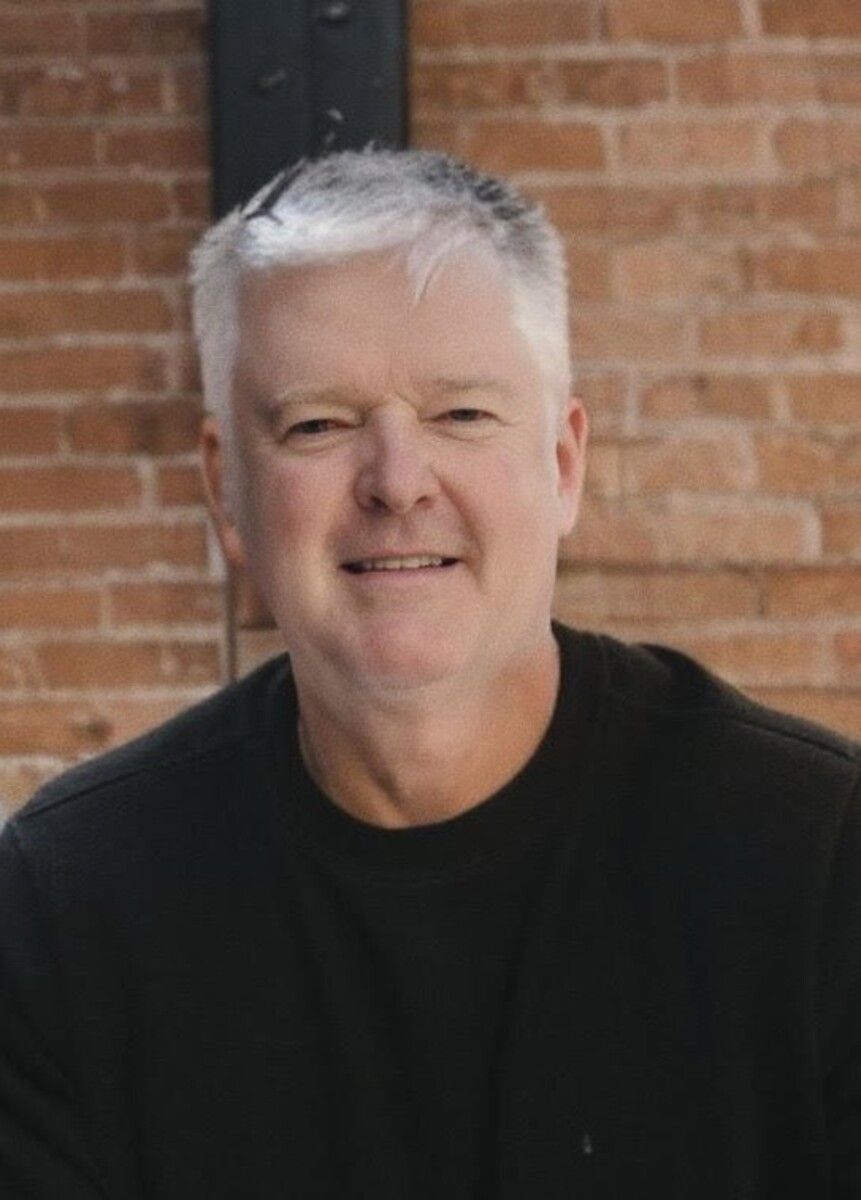
John W. Peace II is a fifth-generation farmer from Big Stone Gap, Virginia, where he grew up on his family’s dairy, Clinch Haven Farms, and still lives today. He’s a proud father to Trey and Shelby Peace, and partner in life to Cathy Swinney. A Virginia Tech graduate with graduate studies at Penn State, he served as the youngest Chair of the Wise County Board of Supervisors (2004–2008).
John is a board member of www.RuralAmericaRising.com PAC.
Rural America Rising is a grassroots organization dedicated to supporting local and regional political candidates across rural America, particularly Democratic and Independent candidates working to bring balanced politics back to small towns and rural communities. From school boards and town councils to state legislative races and congressional campaigns, the organization helps rural candidates build competitive campaigns through media support, strategy, grassroots networking, and fundraising assistance.
He’s also a two-time Amazon bestselling author. Learn more at www.JohnWPeace.com.
Contact: https://linktr.ee/JohnWPeace