In partnership with

Mama’s Drive to Corry, PA: A Lesson in Political Salesmanship 101
Mama loves the drive to Corry, PA. A native Mississippian, she is unused to Pennsylvania’s protracted autumns. Back home, September is still summertime—but with SEC football and zero fall colors. So, Mama loves Pennsylvania in September with its autumn yellows and luminous reds. She also feels at home in Corry, Pennsylvania. Once a month, she takes the 45-minute drive from Erie to Corry (population: 6,000) with me. There, I lead a group who are grappling with our tumultuous politics. A collection of small-town Republicans and Democrats, these Corryites, like Mama, are bewildered by Donald Trump.
Corry is a Rust Belt town tucked into Pennsylvania’s northwest corner. I’m a political historian who chronicles Trumpism. And Western Pennsylvania is ground zero for this political phenomenon. Pittsburgh’s Allegheny County remains what it was in 1988: a Democratic bastion. Michael Dukakis and Kamala Harris both won nearly 60-percent of Allegheny County votes. It is the 1.3 million western Pennsylvanians who live outside Pittsburgh, in small towns like Corry, who have swung to Trump.
In 2008, John McCain won rural, small-town western Pennsylvania. But Barack Obama battled him to a stalemate in West Pennsylvania’s Mercer and Greene counties and kept the race in low single digits in Indiana, Lawrence, Warren, and Washington counties. This, along with Obama’s urban margins, gave Democrats the state by 10 points. In 2024, Trump took West Pennsylvania counties that were close in 2008 by 26 (Washington), 30 (Mercer), 34 (Lawrence), and 38 (Fayette) points. Corry voted Obama in 2008 but gave Trump 68 percent of their ballots in 2024. Big rural margins helped Trump win the Keystone state; voters just like them give him the rest of the Blue Wall (Michigan & Wisconsin), which makes Trump president. If you want to understand Trumpism, come to Corry, Pennsylvania. But don’t ask Mama or my band of Rust Belt dissidents—they are as confounded by Trumpism as the English professor down the hall.
Looking for unbiased, fact-based news? Join 1440 today.

Join over 4 million Americans who start their day with 1440 – your daily digest for unbiased, fact-centric news. From politics to sports, we cover it all by analyzing over 100 sources. Our concise, 5-minute read lands in your inbox each morning at no cost. Experience news without the noise; let 1440 help you make up your own mind. Sign up now and invite your friends and family to be part of the informed.
Kat DiVittorio understands. The Corry native and registered Democrat explained "The people of Corry don't feel seen or heard—they are bitter. They feel as if they have to defend their right to exist. It might not be the case, but people feel that way." DiVittorio is onto something. In the 1990s, Bill Clinton won about half of rural America’s vote. In 2008, Obama launched his general election campaign in rural, southwest Virginia. More than a year of rural organizing, raised the Democrat's rural vote in swing states by eight to 12 percent. The Democrat even won all four of Corry's voting wards. A generation later, Democrats are nowhere to be seen. The party has a county chair in approximately 300 of the nation’s 3,244 counties. Democrats spend 3-percent of party funds in rural, small-town America—where 20-percent of Americans live. Folks in Corry feel invisible, because they are, to Democrats. This is why Rural America Rising is so crucial. Rural Americans only turned to Trump, once Democrats abandoned them. If Democrats return to rural, small-town America, Trumpism’s advantage there disappears.
America’s political divide is not just urban versus rural. Yes, in 2024 Trump won an eye-popping 74-percent of the rural Pennsylvania vote and lost Philadelphia and Pittsburgh by 39 points. But our partisan chasm is deeper than this. Even in Corry, Democrats and Republicans live in separate political universes. Mama would never call a Trump voter “brainwashed” or a “fascist,” but I hear such things often in Corry. This is where I learned that healing our partisan divide begins in rural America—and it begins with rural Democrats. If rural Democrats can’t talk to Trump voters, then who can?
In September, Doug Mullins and John Peace Zoomed into our monthly meeting in Corry. Smart, rural, and common sensical the duo struck a chord with Corryites—they were at home, like Mama, with their people. Similar to urbanites, Corry’s anti-Trumpists so loathe the president that they cannot understand his appeal. Their basic human drive to connect, is short wired by Trump’s brutishness. John Peace, as only a salesman would understand, explained to them “you can’t sell a Ford truck to someone who drives a Chevy truck, who are ‘Chevy People’ by bashing Chevys.”
In other words, if you insult a Trump voter’s judgement by insulting Trump they will tune you out. Doug Mullins is proof of this. A Democratic officeholder in a county where Trump wins 8 of 10 votes, Mullins knows how to woo Trump voters. He taught my group the hard art of “the pivot.” In 2025 America, when Republicans jab a finger, Democrats reply with a clenched fist. Mullins instructed us on how to breathe, smile, and change the subject.
The path out of our downward political spiral begins with rural neighbors speaking across the divide. Most Americans, rural and urban, are sick of our toxic, performative politics. Democrats can repair by following a simple maxim: if you don’t like Trump, then don’t act like him. Like Mama, notice the fall colors. Be human. Connect. This, not anger, is Trumpism’s kryptonite. Rural America holds the key; human connections turn the knob.

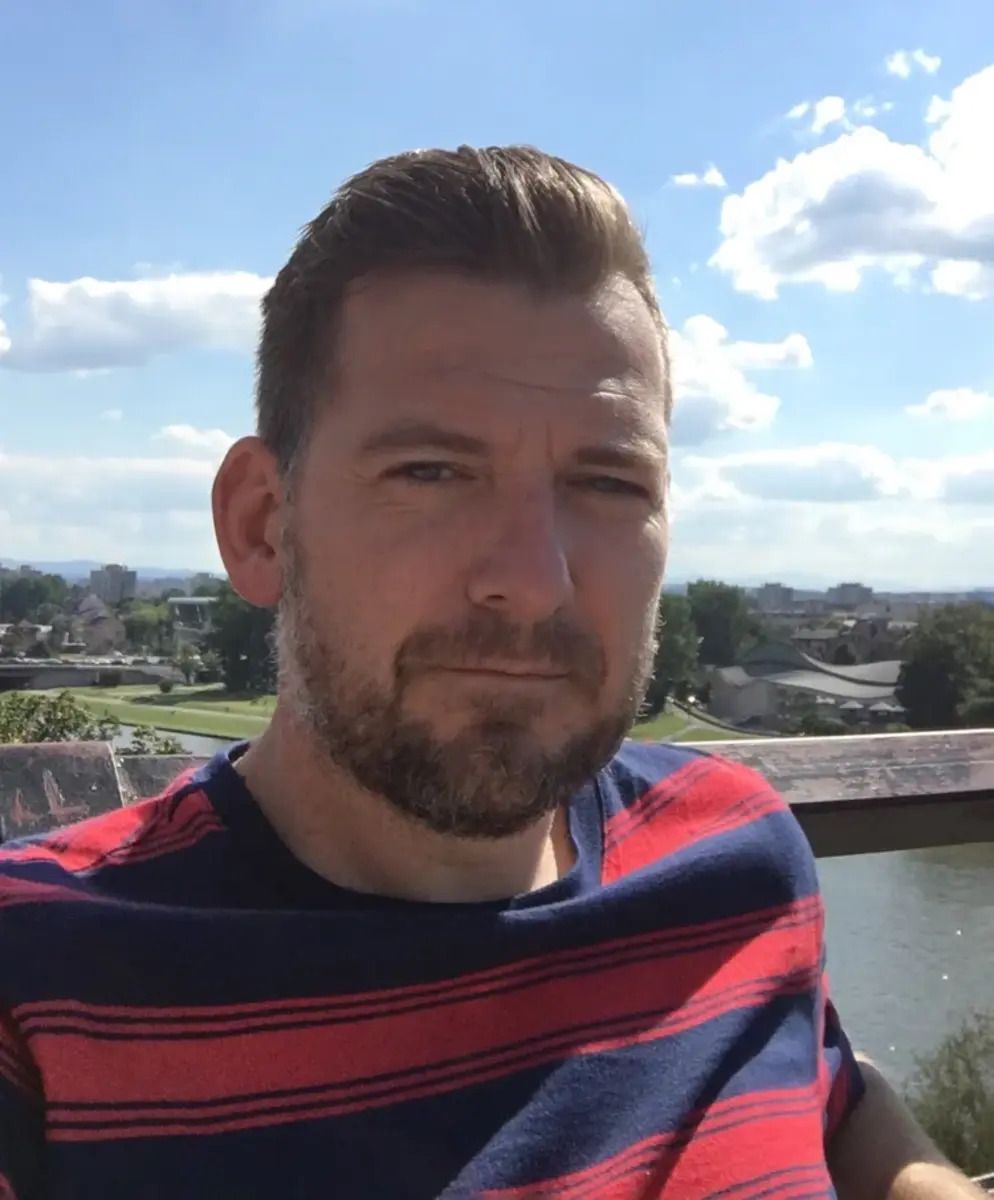
Jeff Bloodworth is a writer & professor of American political history in the School of Public Service & Global Affairs at Gannon University (Erie, PA). He has published widely on post-1960s liberalism and conservatism. He is currently midway through a biography of Speaker Carl Albert, who presided as Majority Leader during the 1960s and as Speaker during Watergate. Heartland Liberal is under contract with the University of Oklahoma Press.
Bloodworth holds a Ph.D. in modern United States history from Ohio University’s Contemporary History Institute and a certificate in contemporary history from the University of Copenhagen. His book, Losing the Center: The Decline of American Liberalism 1968-1992 (University of Kentucky Press) was nominated for the Ellis W. Hawley and Frederick Jackson Turner awards. Bloodworth has received grants and fellowships from the Truman, Eisenhower, Kennedy, Johnson, & Ford Libraries as well as the U.S. Holocaust Museum and research repositories and educational institutes throughout the United States, Germany, Israel, Poland, and the Ukraine. His work has appeared in The Historian, The Liberal Patriot, Cleveland Plain Dealer, Political Science & Politics, The Wisconsin Magazine of History, Tikkun, The Free Press, St. Louis Post-Dispatch, & Philadelphia Inquirer.
